Exhibition
Across eight artworks, my exhibition explores the relationship between humanity and nature, how it evolves and aspects that remain unchanged despite the passage of time. I explore this through natural cycles, incorporating cyclicality and dynamism and evolution. In each of my pieces, I intend to present different moments in these cycles, each inviting the audience into unique environments. Instead of depicting nature in a purely literal sense, I employ more abstract compositions that illustrate otherworldly scenes that simultaneously seem both familiar and dream-like. I use this contrast to communicate the vastness and unknowable immenseness of nature beyond what we experience day-to-day.
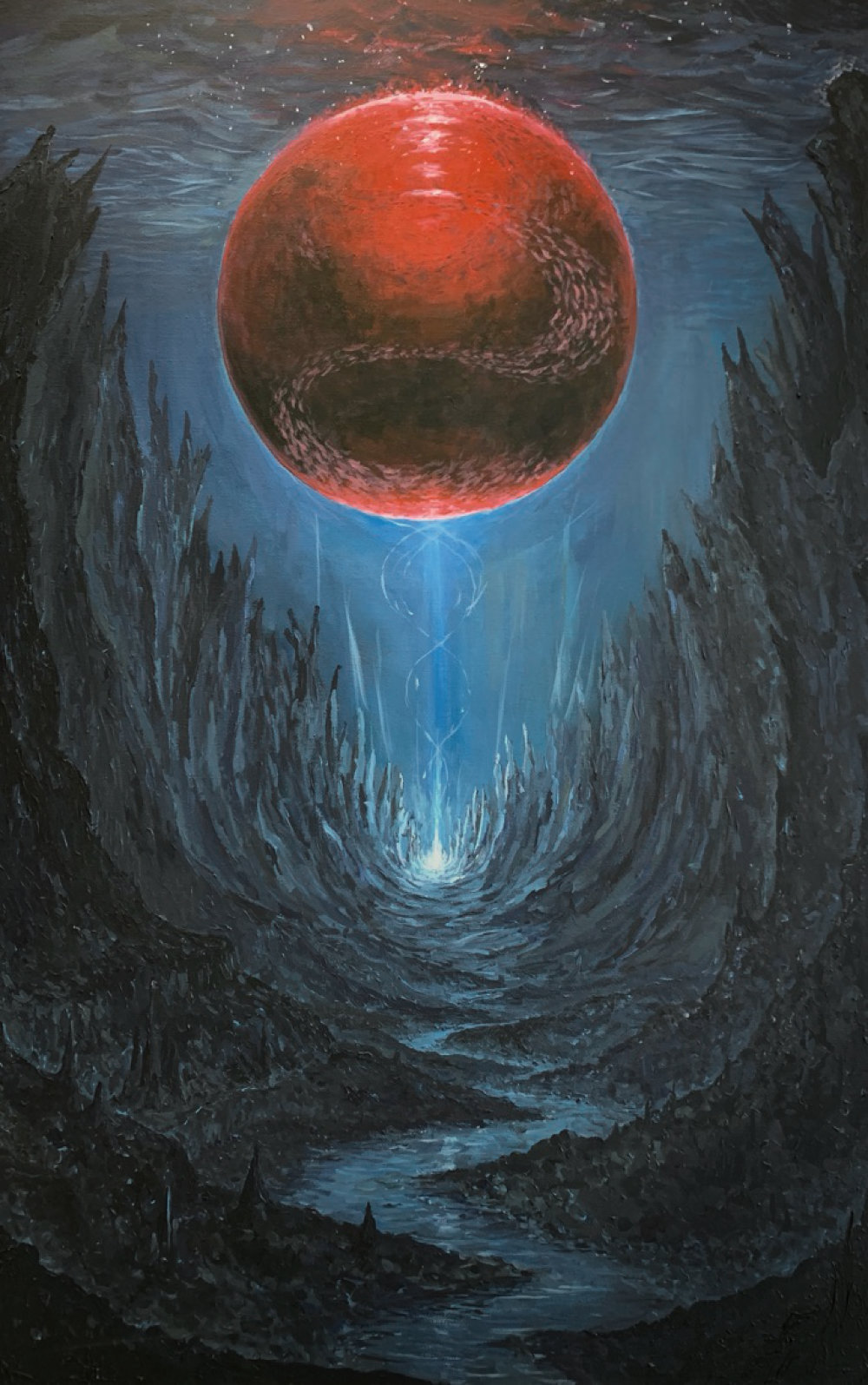
Emergence
Acrylic on canvas • 92 x 61cm
This piece depicts the emergence of life from a dead world, the origin of all organic cycles. Inspired by Igor Grabar’s brushwork and Ivan Konstantinovich Aivazovsky’s representation of water, it portrays a place of oceanic fissures and hydrothermal vents, aiming to articulate a singular and unprecedented event. The orb represents energy, the fusion of the sun, moon and the cell in one. Within, you can see shoals of fish which function to contrast dynamism against the lifeless surroundings.
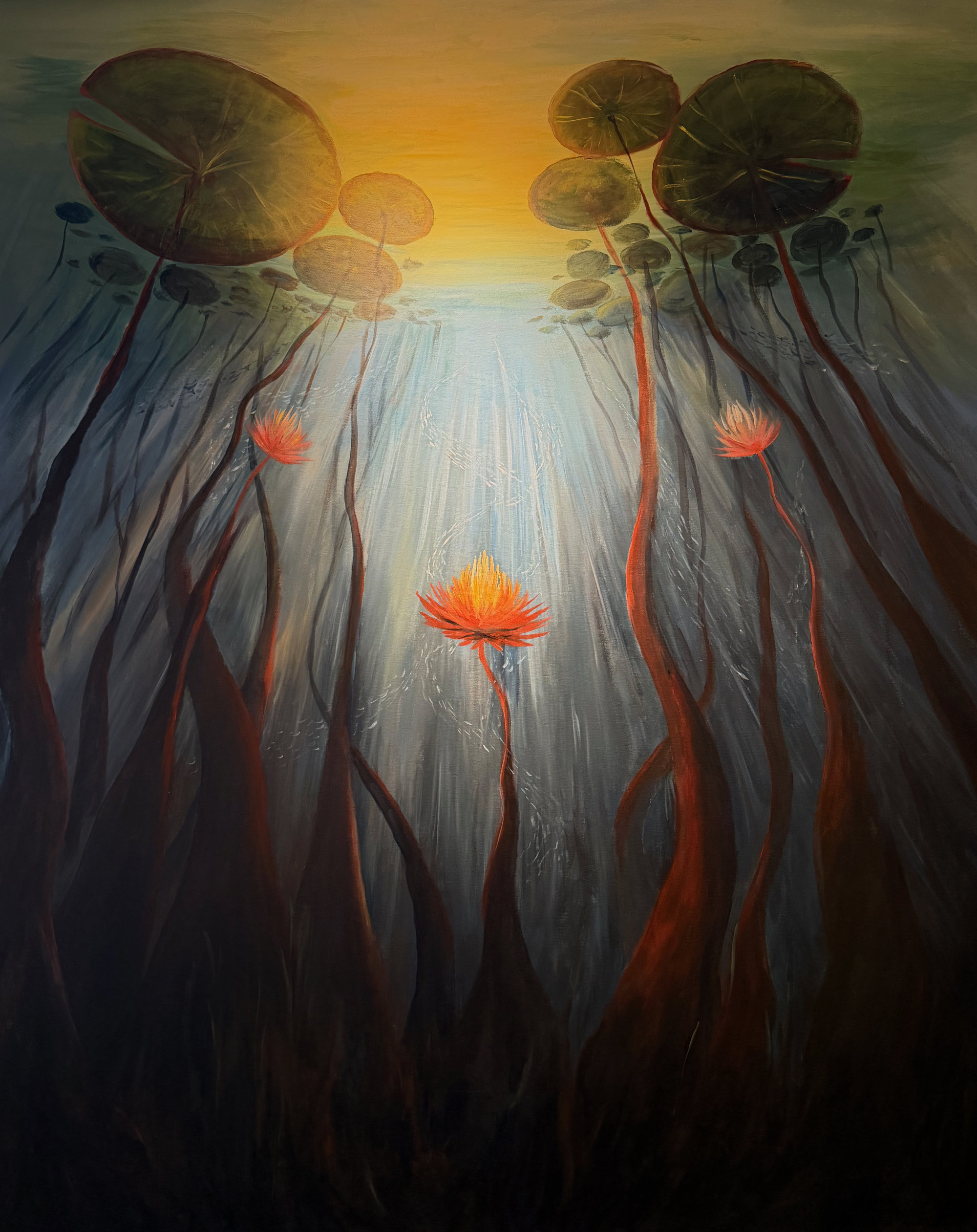
Energy
Acrylic on canvas • 152 x 122 cm
In Energy I explore photosynthesis and the role of light in facilitating life. Inspired by Claude Monet, the piece depicts sunlight penetrating aquatic depths. As sunlight filters through water, it enables photosynthesis, transforming light into energy. Waterlilies are symbolic of creation, the lily roots turn to blood red veins towards the depths, functioning to communicate the idea of dependence and hierarchy in natural ecosystems, enhanced by the worm’s eye view perspective.
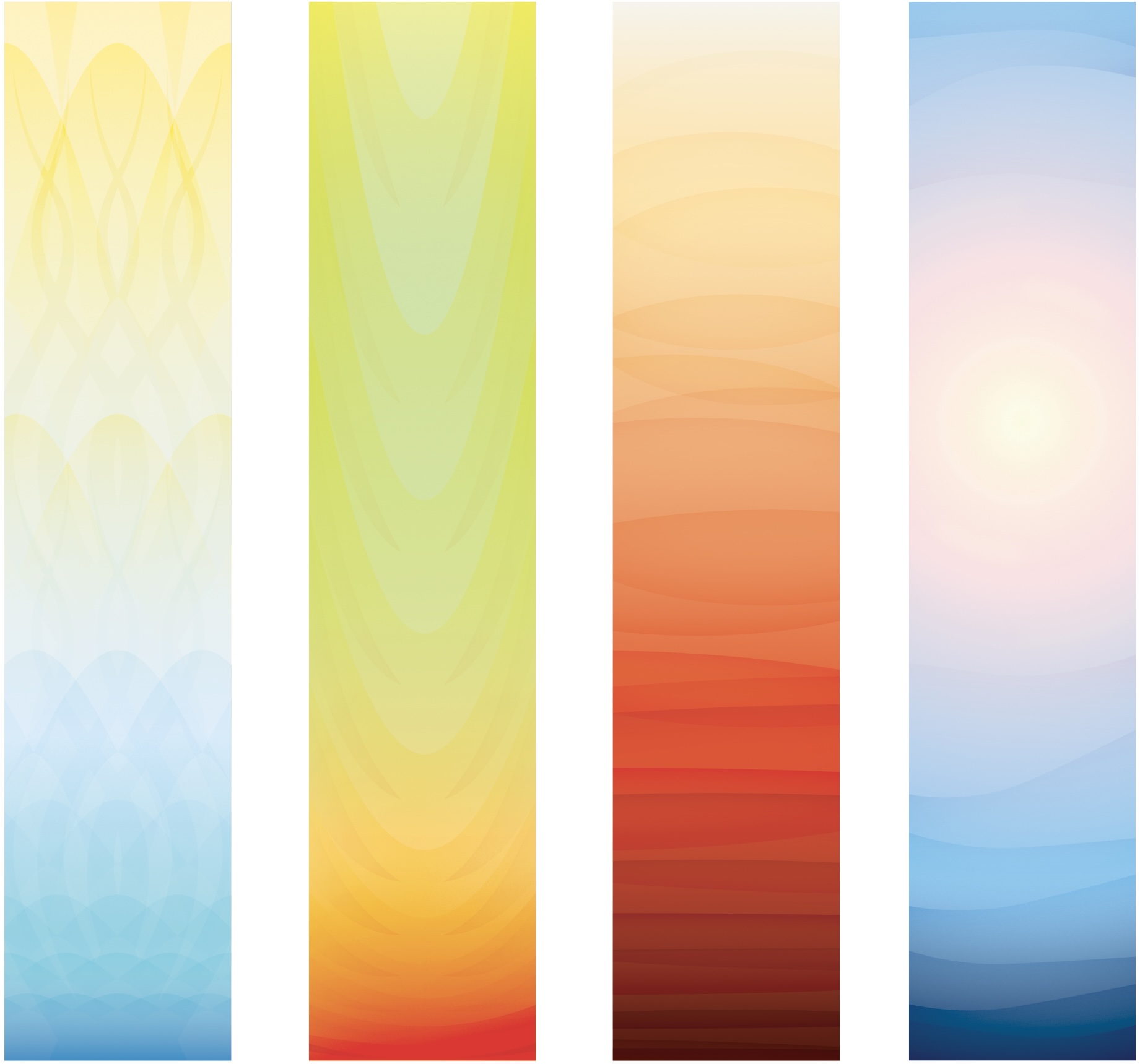
Seasons
Digital print installation • 233 x 50 cm Each
This series portrays seasonal change through the lens of energy. Each piece employs abstracted imagery to convey the unique flow of energy throughout the year. In Spring, energy escapes upwards, while Summer focuses on the culmination of energy. Autumn depicts matter settling for winter, like the accumulation of leaves upon a forest floor. Winter shows the seasonal confinement of energy.
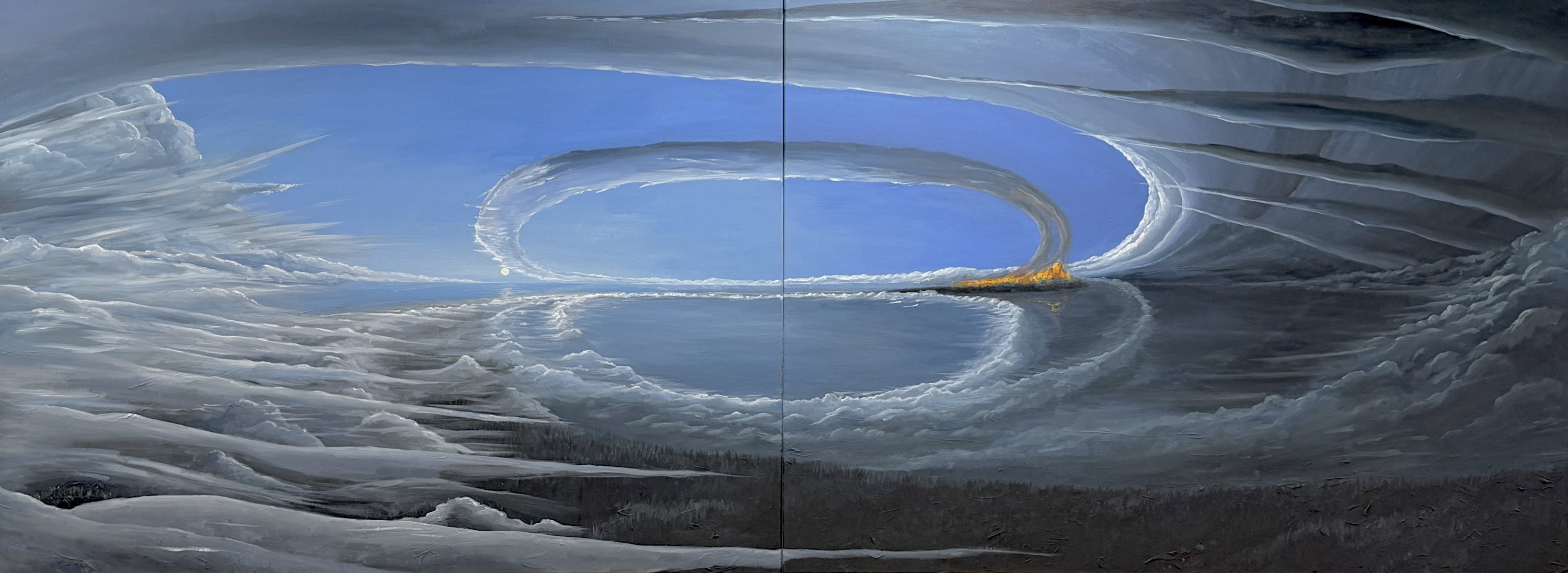
Ozymandias
Acrylic on canvas • 92 x 244 cm
This diptych intends to contextualise human involvement in natural cycles, challenging the belief that humanity is separate from its environment. The ouroboros-like composition symbolises infinity and unity. Inspired by Thomas Cole’s use of landscape as allegory, my intent is to communicate that human creations: cities, structures or even ambitions, are inseparable from nature. This piece is named after a sonnet by Percy Bysshe Shelley, which meditates upon the ephemeral nature of empire.
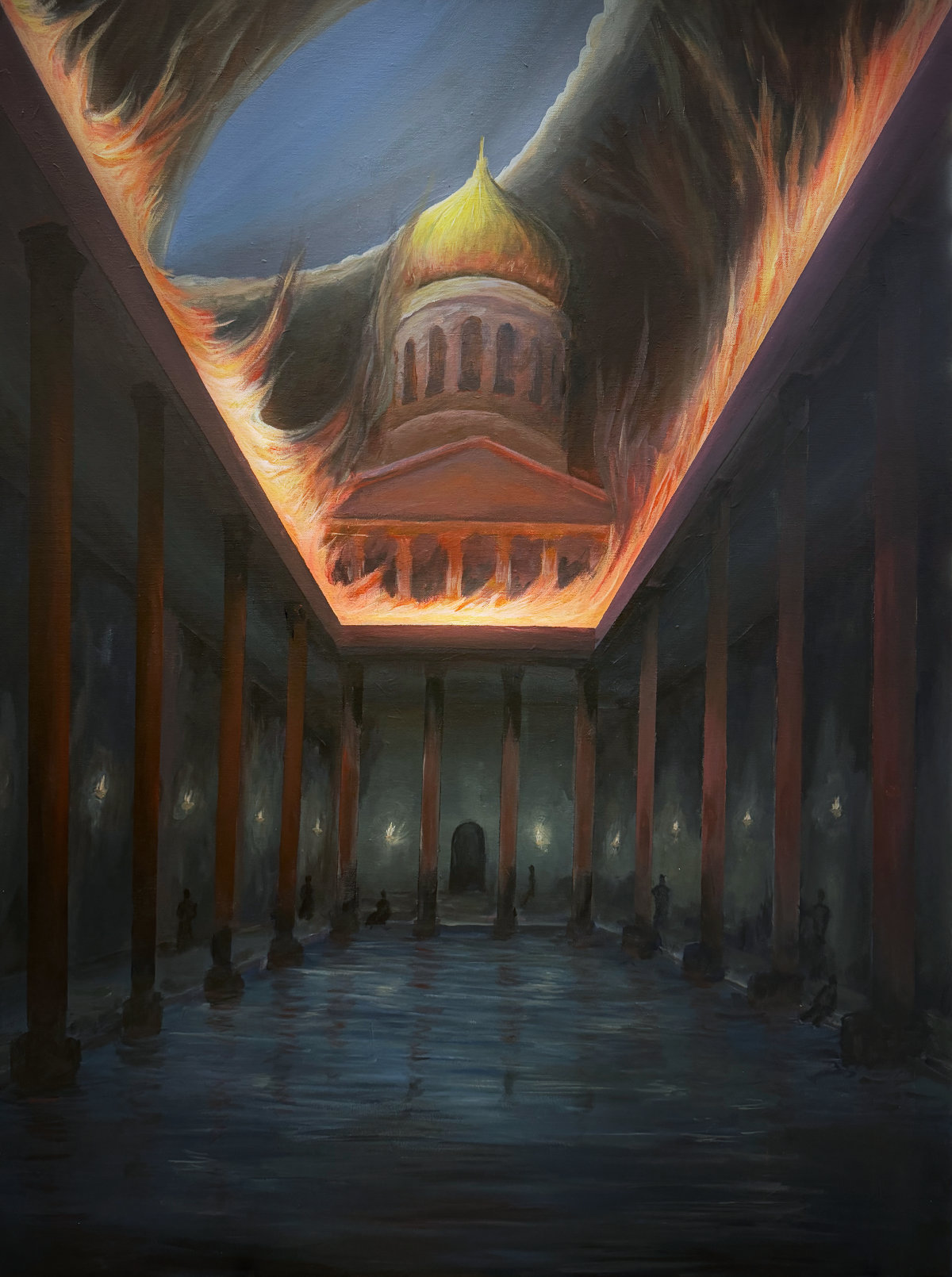
Anthropocene
Acrylic on canvas • 122 x 92 cm
Inspired by Thomas Cole's world-building ‘The Course of an Empire’ series, this painting depicts a layered scene within the burning city seen in my piece ‘Ozymandias’. Pompeii inspired the Roman bath below while above is an orthodox cathedral. The different architectural eras represent cyclicality. The city's inhabitants are in repose among desolation. The title refers to the name of the human epoch, in which humanity, for the first time, exerts the greatest influence on the environment.
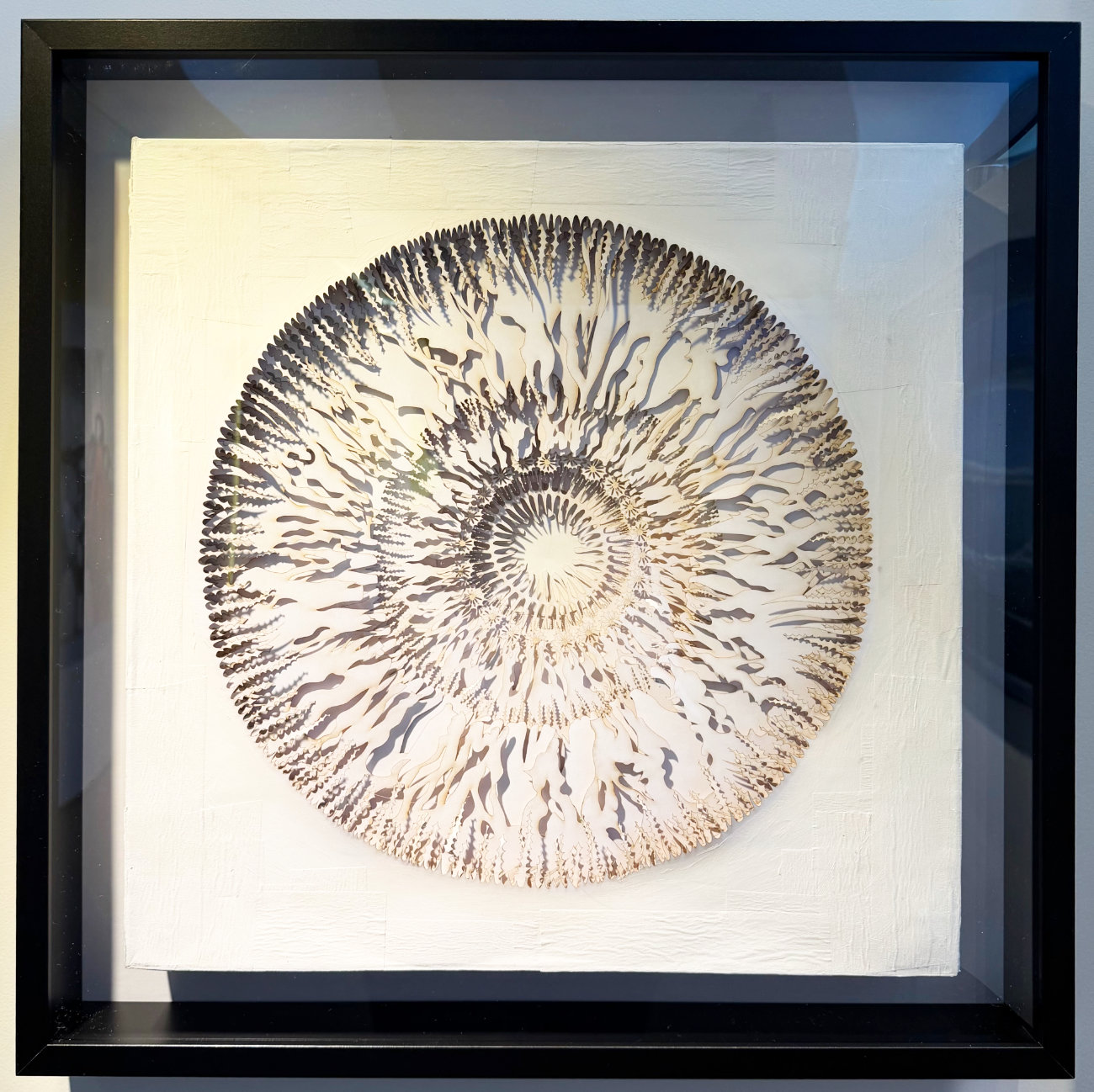
Unity
Laser cut card • 42 x 42 cm
Unity explores self-similarity of natural forms across physical scales in the universe. Ranging from the retina to galactic filaments, the infinitely vast can be found within the minute, a single order forms the natural world into a single, coalesced body. The multi-layered composition mimics an eye, reflecting similarity across scales. Developing this piece, I was inspired by Chinese artist Baishui’s ornate formal approach to convey teeming life.
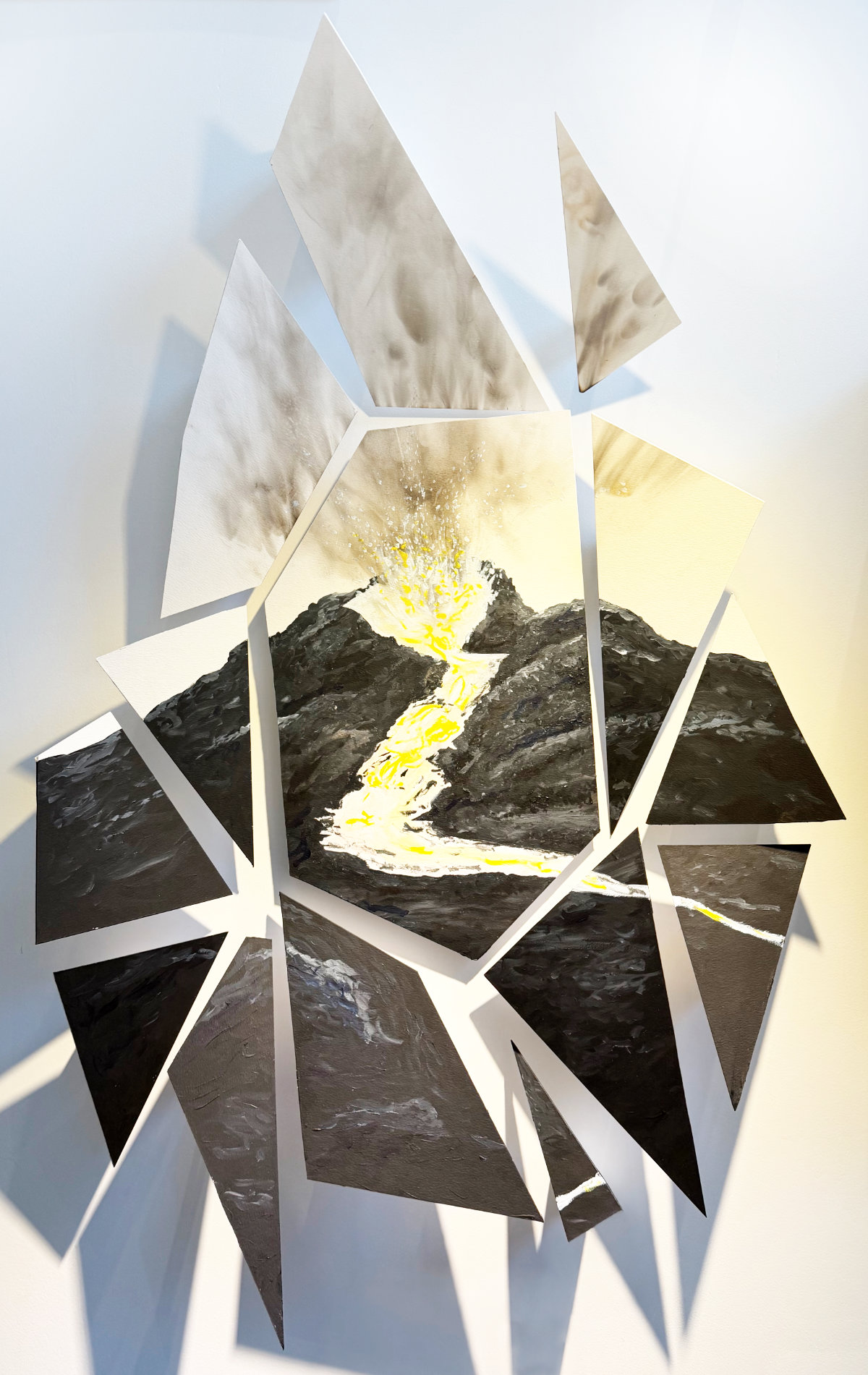
Genesis
Mixed media
Here, I use a burning fumage technique to present the Earth’s geological cycles’ power to create and destroy. Inspired by the Siberian traps event, it illustrates raging pyroplastic flow across scorched earth. The shape of the composition is inspired by obsidian shards which were vital to early humans for the creation of tools. The shattered composition reflects on the fragile relationship between life and the planet’s deep, unpredictable geological cycles.
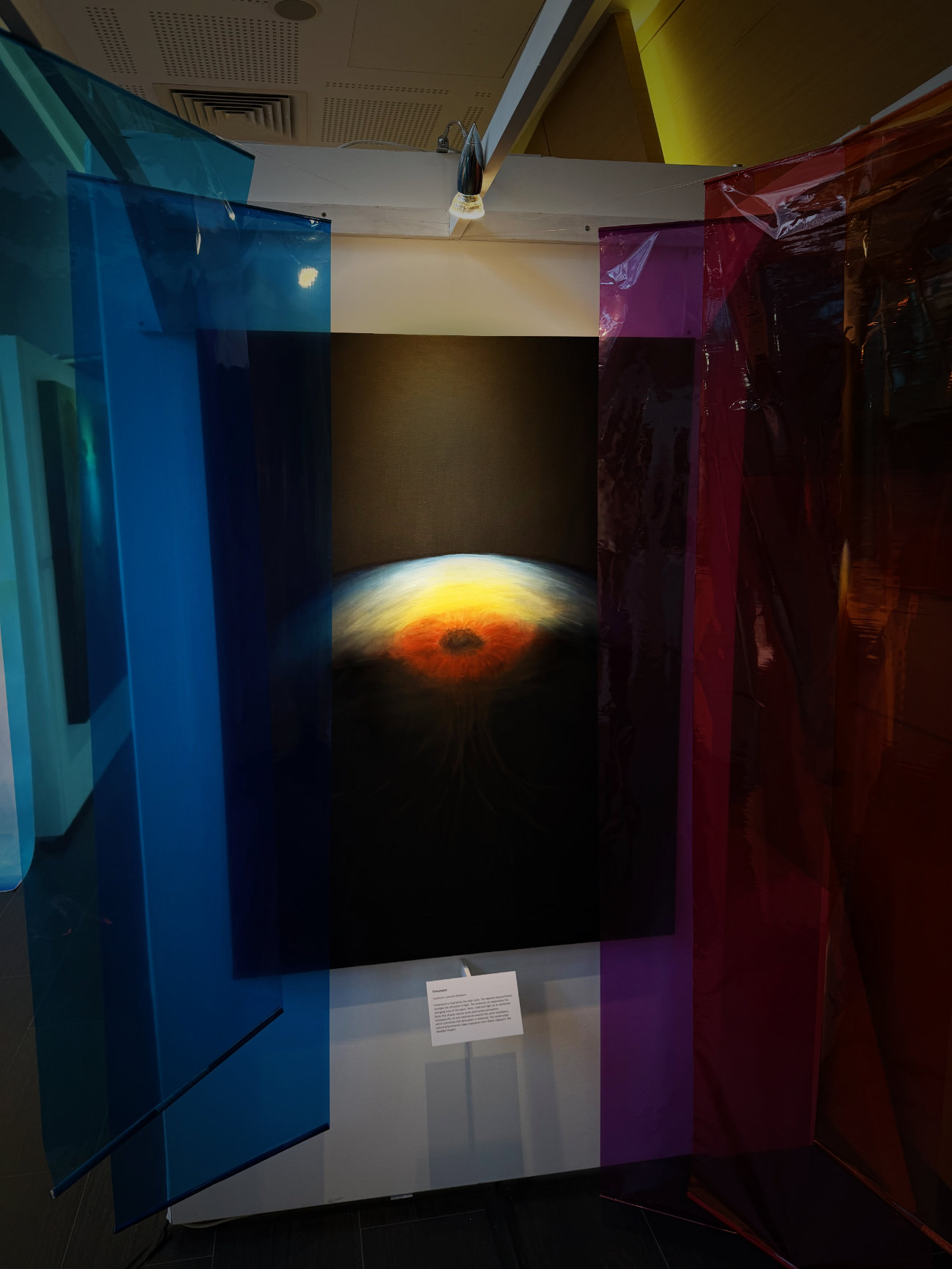
Firmament
Installation
Inspired by Olafur Eliasson’s The Weather Project, Firmament explores light and perception. The title alludes to the Bible: the firmament defines the separation between heaven and earth, allegory for the perceived boundary between humanity and nature. The layered divided coloured sheets recreate the refraction of light, showing separation, while the painting and its ocular imagery is coloured to resemble a celestial body, conveying that the human-nature boundary is produced by perception alone.